
Stámés (About)
This website is a collaboration between the University of the Fraser Valley (UFV) and primarily Stó:lō individuals practicing traditional and contemporary foodways. It has been produced with the direction of Stó:lō Elders, Knowledge Keepers, cultural advisors, and subject experts. With this guidance and respect for cultural teachings, we have approached this project with open minds and hearts and the best of intentions.
We hope that this living digital portal will provide a home for Stó:lō voices by contributing to the repatriation of traditional knowledge. We are humbled to use this website to engage with our visitors and share the constantly emerging, inclusive stories that reflect the dynamic Stó:lō culture. However, acknowledging the effects of colonialism and respecting the wishes of Elders and Knowledge Keepers, we present only information that has been identified as suitable for sharing with a broader audience.
The importance of
sharing knowledge
Sxwōxwiyám are origin stories that carry lessons for the Stó:lō about how to live properly. Sxwōxwiyám tell of a time long ago when the world was “not quite right.” At that time, animals and people were able to change their form and talk to each other.
Into this world came Xexá:ls , the Transformers, who made their way through Stó:lō Téméxw , transforming people – some into landmarks, such as Lhílheqey (Mt. Cheam), others into animals and plants that became Stó:lō ancestors and valued resources, while others were changed into stone. Sxwōxwiyám show how Stó:lō people are connected to everything in Stó:lō Téméxw (Stó:lō land and home), and to each other. One such story demonstrates the importance of sharing knowledge:
The Great Spirit travelled the land... and he taught these three siyá:m, these three chiefs, how to write their language. And, they were supposed to teach everyone how to write their language, but they didn't. So, they were heaped into a pile and turned to stone. ...they were supposed to teach the language to everyone, and because they didn't, people from all different lands will come and take all the knowledge from the people – because they wouldn't learn to write, they lost that knowledge."
—— Bertha Peters, née George Stó:lō Elder, 1995
Knowledge Is for Everybody
Náxáxalhts’i, Dr. Albert “Sonny” McHalsie
S'ólh Téméxw te íkw'élò. Xólhmet te mexw’ stám ít kwelát.
This is our land. We have to take care of everything that belongs to us.
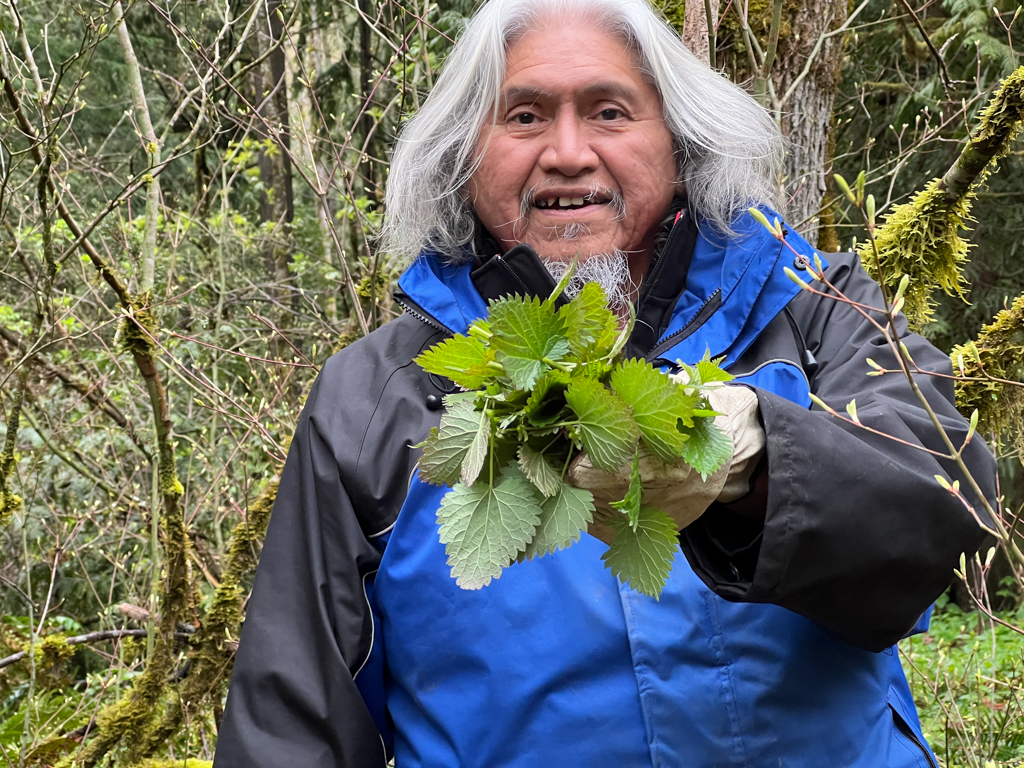
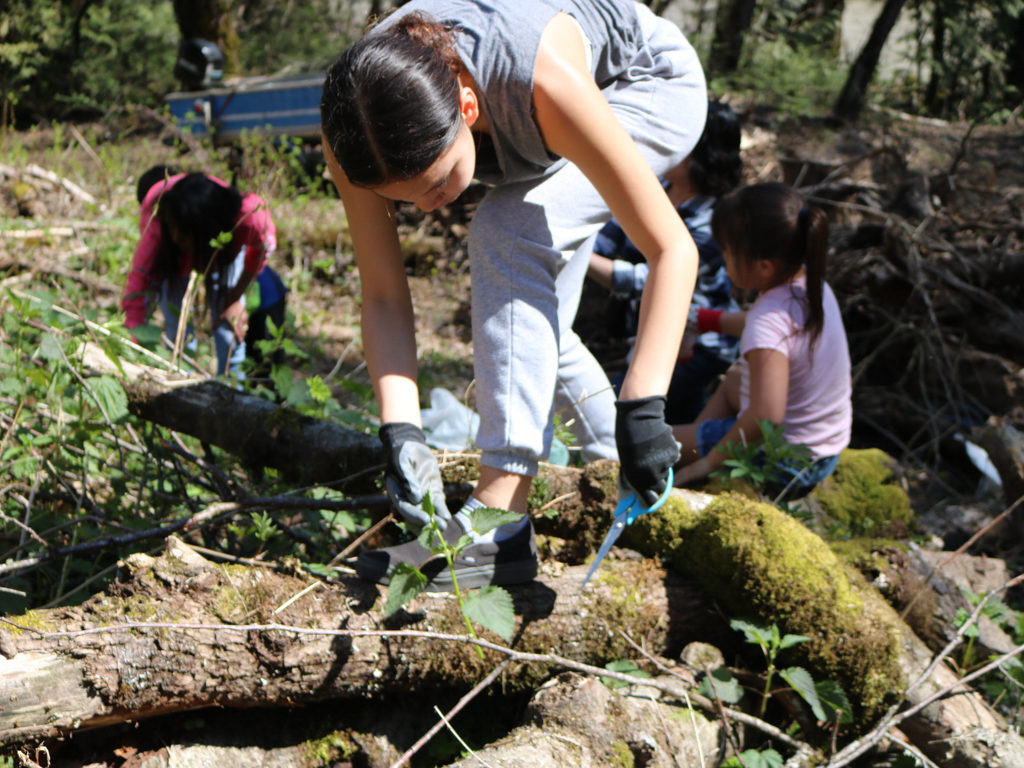
Stó:lō culture emphasizes the value of knowing one’s history – the stories of one’s ancestors. Sxwōxwiyám (origin stories) and sqwélqwel (true news, family history) are two ways through which we are taught. The story of Xáy:tem is an important sxwōxwiyám because it shows that we teach and learn by sharing. We maintain our oral traditions, but those chiefs were taught to write by Xe:xá:ls, and told to teach the people. That sxwōxwiyám makes it clear that writing is a legitimate way to preserve our culture. Books, and video and audio recordings are now also used to document our knowledge of the past, and websites are an extension of that.
Elder Rosaleen George said that everything about our history and culture should be shared, otherwise, how are our grandchildren going to learn if we do not tell them everything? Elders reach a time in their lives when the realize they need to share, or their knowledge will be lost. Elizabeth Herrling said you can be the smartest person, but if you don’t share your knowledge then it means nothing.
Of course, there are certain things that are kept private, and there are protocols about how traditional knowledge can be taught. There are things that people will not speak about – “private knowledge” that is kept only within their own family or community, but they will share other aspects of their knowledge with everyone. Too often in the past others have taken our knowledge from us and used it without our consent, and never returned any knowledge back. Today we ask that people give credit to those from whom they have learned, and that we maintain our control over the way our knowledge is distributed.
Sqwélqwel means “true news, family history.” These are all stories about places and resources that our ancestors used and gathered. Once we return to these places, we are obligated to take care of them. We say, “S’ólh Téméxw te íkw’élò. Xólhmet te mexw’ stám ít kwelát.” (This is our land. We have to take care of everything that belongs to us.)
We are guided by our Elders and the lessons embedded in our language. Tómiyeqw is a word that translates as both great great-great-great grandparent AND great great-great-great grandchild. Tómiyeqw teaches the principle that we must weigh everything we do today to ensure that we respect and carry the teachings of our ancestors from seven generations ago, while simultaneously accounting for the needs of our descendants seven generations into the future. There is much that has been lost, and plenty that needs to come back. This website is a digital way to repatriate the history of where Stó:lō traditional and contemporary foodways practices have come from, and prepare for where they are going. It is also a tool to teach our youth and others about our culture and history.
The purpose of this website is to educate people. Both my great-grandfather, Dennis Peters, and my uncle, Peter Dennis Peters, talked about the importance of education. I believe that sharing and educating one another is a step in creating understanding. And, it is from that understanding we can build respectful relationships. I see this website as a part of accomplishing that. Sharing and education override everything – knowledge is for everybody.
Ch'íthométset (We thank you)
Following Stó:lō tradition, “our hands go up” to acknowledge and thank the many individuals who have patiently and generously given their time and knowledge to this project. Your contributions will help all of us – xwélmexw (Indigenous) and xwélitem (non-Indigenous) – to move toward a new relationship where we can learn from each other.
Yálh yuw kw’a’s hò:y — We thank you deeply.
- Kathleen “Kasey” Chapman, Sqéwqel (Seabird Island) First Nation
- Chris Duffy, Lytton First Nation
- Brianna Giroux, Sqéwqel (Seabird Island) First Nation
- Taylen Jimmie Giroux, Sqéwqel (Seabird Island) First Nation
- Wally Joseph, Sqéwqel (Seabird Island) First Nation
- Kalala, Carol Peters, Chowéthel (Chowathil) First Nation
- Kepkwoyalot, Brooklynn Fisher, Sqéwqel (Seabird Island) First Nation
- Kwilosintun, Kelsey Ned, Sema:th First Nation
- Kwilosintun, Murray Ned, Sema:th First Nation
- Mimoqw, Bertha “Birdie” Garner, Union Bar First Nation
- Mimoqw, Deanna McIntyre, Sqéwqel (Seabird Island) First Nation
- Náxáxalhts’i, Dr. Albert “Sonny” McHalsie, Shxw’ōwhámél First Nation
- Ember Peters, Chowéthel (Chowathil) First Nation
- Siyatlestel, Louis Julian, Sema:th First Nation
- Siyolwelh, Marcie Peters, Sqéwqel (Seabird Island) First Nation
- Siyosemot, Maggie Pettis, Sqéwqel (Seabird Island) First Nation
- St’wex:we, Sue Harris, Sqéwqel (Seabird Island) First Nation
- Swiyometel, Dominic Fisher, Sqéwqel (Seabird Island) First Nation
- Sxelches, Kevin Garner, Peqwchó:lthel (Union Bar) First Nation
- Tewiteleq, Matthew Garner, Peqwchó:lthel (Union Bar) First Nation
- Melileqthet, Helen Joe (Ch’iyaqtel First Nation)
- Náxáxalhts’i, Dr. Albert “Sonny” McHalsie (Shxw’ōwhámél First Nation)
- Sh:oysqelwet, Dr. Gwendolyn Point (Ts’elxwéyeqw First Nation)
- Swelchalot, Shirley Hardman (Shxwhá:y Village)
- Xwo:yqwetxw, Nancy Pennier (Sq’éwlets First Nation)
- Siyamiateliyot, Elizabeth Phillips, Xwchíyòm First Nation, Elder in Residence
- Swelchalot, Shirley Hardman, Shxwhá:y Village, AssociateVice President, Indigenous, Indigenous Affairs Office
- Xwo:yqwetxw, Nancy Pennier, Sq’éwlets First Nation, Elder in Residence
- Evan Bowness, Associate Director, Food and Agriculture Institute
- Keith Thor Carlson, Canada Research Chair in Indigenous and Community-Engaged History, Department of History/Research, Engagement and Graduate Studies
- Teresa Carlson, Curator, Research, Engagement, and Graduate Studies
- Jennifer Deon, Associate Professor, Graphic and Digital Design
- Garry Fehr, Associate Vice-President, Research and Graduate Studies
- Peter Geller, Dean, Faculty of Applied and Technical Studies
- Jahnavi, Student Website Design Assistant
- Jacqueline Nolte, former Dean of Arts
- Tracy Ryder Glass, Vice Provost, Academic
- Náxáxalhts’i, Dr. Albert “Sonny McHalsie, Shxw’ōwhámél First Nation, Cultural Advisor/Sxweyxwiyam (Historian)
- David Schaepe, Director/Senior Archaeologist
- Amber Kostuchenko, Manager, Library/Archives, Cultural Education, and Tours
- Stephen Shurgold, Librarian/Archivist
- Desirè Amouzou, Videographer/Editor, Photographer
- Strang Burton, Assistant Professor, Department of Linguistics, University of British Columbia