The Stó:lō are part of the broader Coast Salish cultural and language group. They have lived in Stó:lō téméxw (Stó:lō world/land) since time immemorial. Stó:lō culture is distinct from Indigenous peoples in other parts of Canada, and while similar to other Northwest Coast Indigenous communities, it is uniquely Coast Salish.
Stó:lō means “river” or “river of rivers” – specifically, the Fraser River. The Stó:lō take their name from this mighty river, which flows through their territory and connects the communities/tribes of interrelated families. The Stó:lō are the “people of the river,” who also call themselves xwélmexw (“people of life, or people of the land”). Together, the terms Stó:lō and xwélmexw reflect the inextricable ties that bind the Stó:lō to their traditional territory, which includes all the lands of the lower Fraser River watershed, and extends upriver to a site seven kilometers above the town of Yale.
Stó:lō Téméxw (Stó:lō world/land)
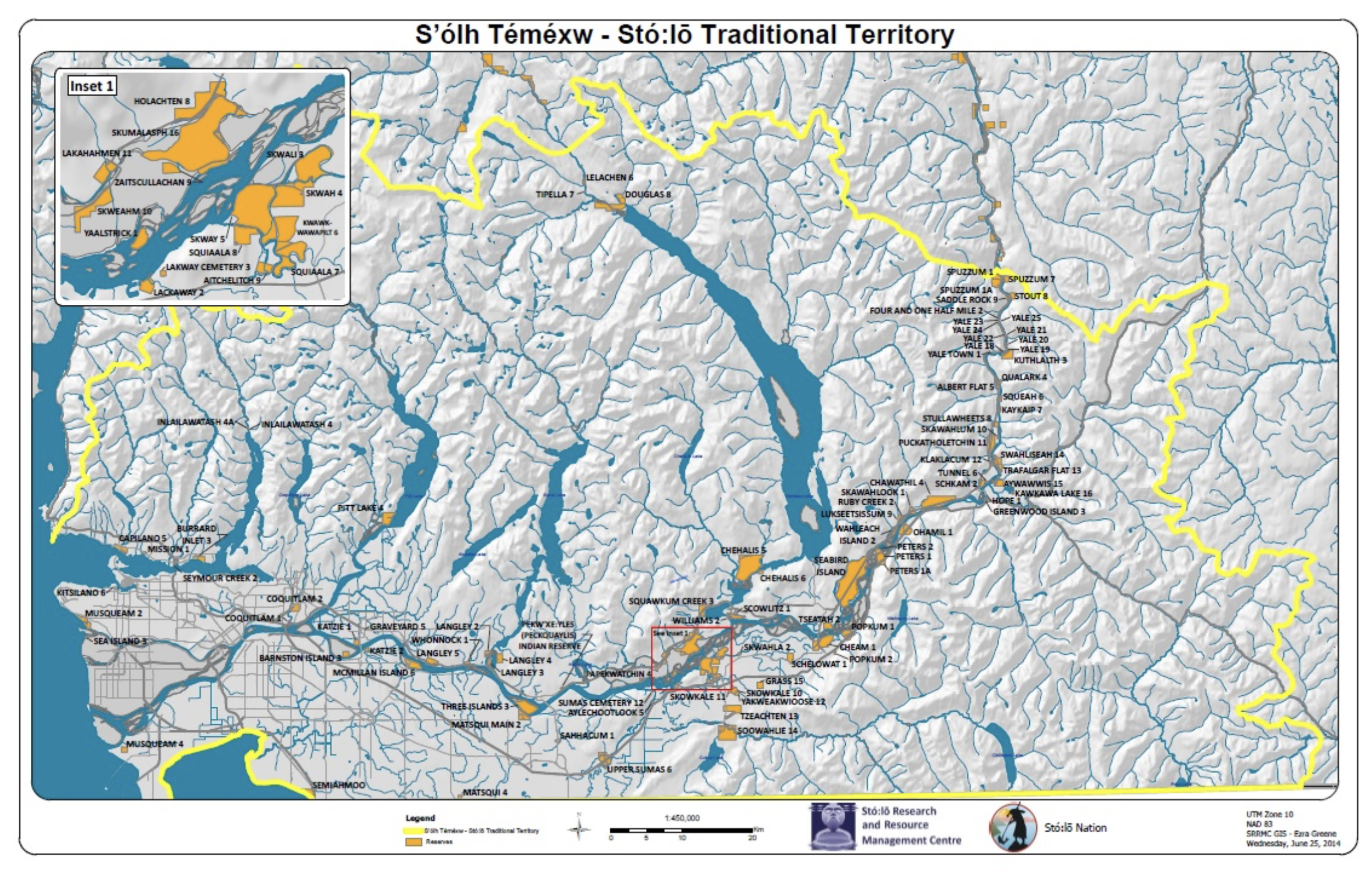
A digital map of the map of Stó:lō Téméxw
However, Stó:lō téméxw is not just a geographical area. It also contains the physical and spiritual elements, such as belongings, animals, fish, plants, environment, transformer sites, homes, and ancestors, that tie generations of Stó:lō to each other and anchor them to their land/world. Stó:lō sxwōxwiyám (origin stories or ancient narratives) tell of a time in the far distant past when animals and people could talk to one another, and even transform into one another. Into this world, Chíchelh Siyám, the Great Creator, sent Xexá:ls , “the Transformers” – the daughter and three sons of Red Headed Woodpecker and Black Bear. Xexá:ls “fixed” that chaotic and dangerous world into the permanent, recognizable one we know today by transforming Stó:lō ancestors. Some people were turned into stone as punishment or to serve as lessons (as with the three chiefs at Xa:ytem, who refused to share knowledge), while others were rewarded and became particular landmarks, plants, or animals (as with the generous man Xpá:y, who became the cedar tree, and Lhílheqey (Mt. Cheam), the “mother mountain” who watches over the Stó:lō and returning salmon).
Xe:xá:ls also gave Stó:lō ancestors the knowledge and skills they needed to survive and thrive. Sxwōxwiyám show how the Stó:lō are connected to their past, to everything in Stó:lō téméxw, and to each other – each geographical feature, plant and animal that has a Transformer story associated with it provides lessons for Stó:lō about how to behave, how to get along with one another, and how to care for the natural environment. Xwélíqwéltél (Grand Chief Steven Point) invites people to think of the Transformers’ actions as having “literally inscribed the Stó:lō ‘Constitution’ onto the landscape.”
More than this, when Xexá:ls transformed the Stó:lō ancestors, their shxwelí (spirit or life force) remained alive and inside the things they were transformed into, and are still present in those things today. That is why the Stó:lō regard natural resources and geographical features as relatives. According to Yamelot (Elder Rosaleen George), “Shxwelí is inside you…. It’s in your parents, it’s in your grandparents, it’s in your great-grandparents, it’s in your great-great-great grandparents. It’s in the rocks, it’s in the trees, it’s in the grass, it’s in the ground.”
More recent histories, called sqwélqwel , are the oral and documented histories of Stó:lō individuals, their families, and their ancestors. Sqwélqwel include stories about who a person’s relatives are, and where their families have lived, fished, hunted, harvest, and travelled. While sxwōxwiyám show the Stó:lō how they are connected to their ancient past, sqwélqwel tie them to the present, and future.
Together, sxwōxwiyám and sqwélqwel inform the Stó:lō principle of tómiyeqw (“The Fourteen Generations Principle”). Tómiyeqw means both “great-great-great-great grandchild” and great-great-great-great grandparent.” The term reflects a distinct cosmology and philosophy, and shapes the way Stó:lō see the world and interact with their environment. Those living today know that in making any decision, they are expected to take into consideration the anticipated needs of the people as-yet-unborn, who will live seven generations into the future, while simultaneously doing so in a way that would be understood by, and acceptable to, their ancestors from seven generations in the past.
These understandings and principles place the Stó:lō in a unique position in relation to Stó:lō téméxw. Based on thousands of years of cultural and spiritual teachings, the Stó:lō try to maintain a reciprocal and balanced relationship with their environment. As Mimoqw, Elder Bertha “Birdie” Garner said, “We take care of s’ólh téméxw (our world/land) and everything in it, and it takes care of us.”
Four Ecological Niches/Zones
Seasonal Rounds
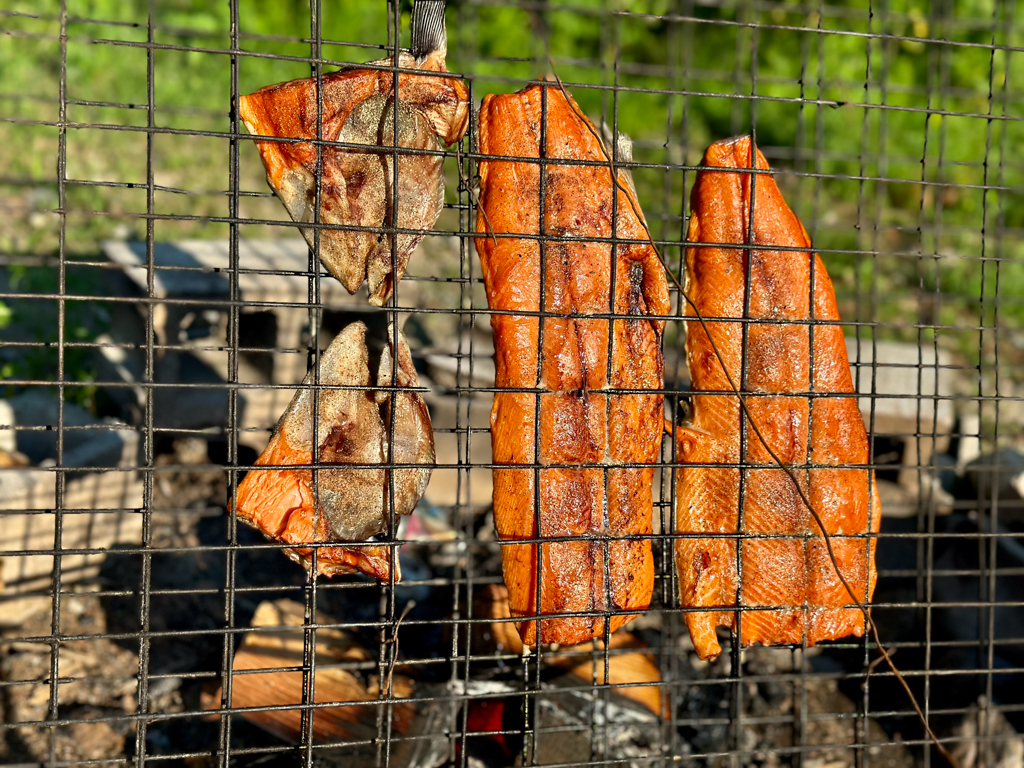
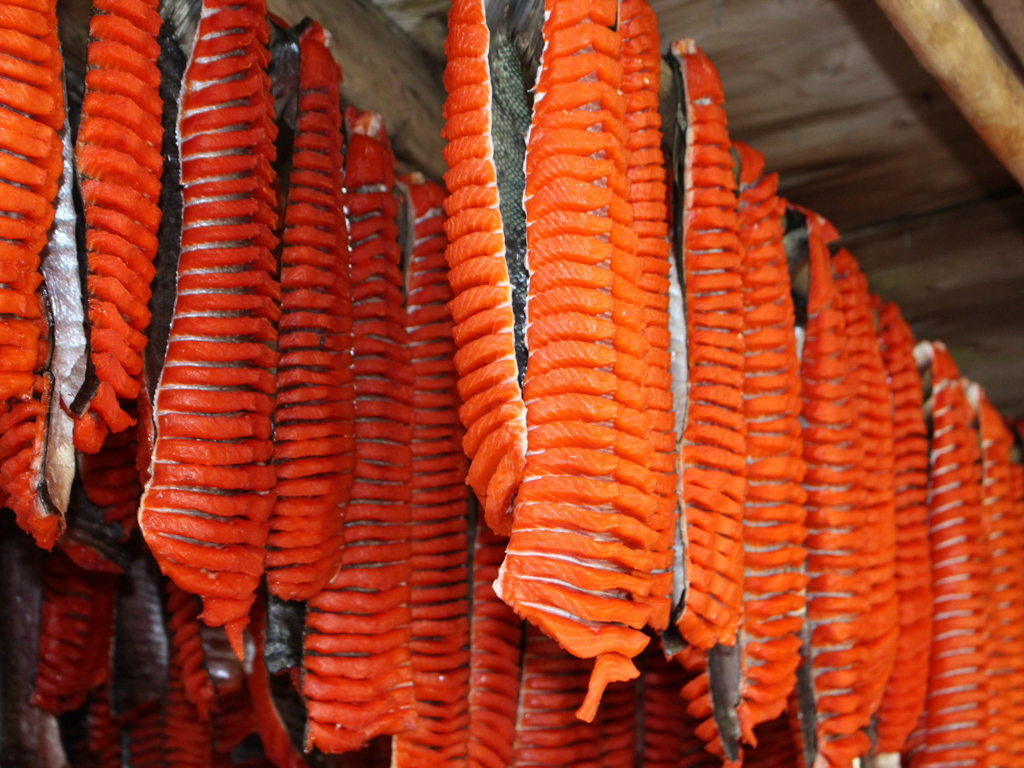
Traditionally, Stó:lō life revolved around distinct seasonal patterns, and families travelled to various sites in Stó:lō Téméxw to collect plants for food and medicine, to hunt and fish, and to harvest raw materials, such as mountain goat wool for blankets, and cedar basket-making supplies. People knew what resources were available, when to use them, and where to find them, as well as which activities were to be carried out each month and how these activities related to one another. For instance, mountain goat wool was gathered in the late spring, at the same time as cedar bark was pulled. In the month of Temchálhtel (“Time to wind-dry fish”), many people moved to canyon fish camps located between Yale and Spuzzum to catch and wind-dry salmon.
Temxéytl'
“Cold Time”
(Winter)
Temqw'iles
“When everything comes up”
(Spring)
Temkw'ó:kw'es
“Hot time”
(Summer)
Temhilálxw
“When the leaves fall”
(Autumn)
Many Stó:lō continue to follow these practices, despite various pressures that make it more difficult to find and access traditional resources. Today, contemporary foodways activities, such as planting, harvesting, preserving and storing harvests from a garden, have been integrated with traditional practices.
Yilólem (The Year)
For the Stó:lō, Yilólem (the year) begins around mid-October. Each month is marked by one complete cycle of the moon (which takes approximately 29.5 days), so although there are usually twelve months per year, there are years when there are thirteen moons (a leap year). According to the “First Stalo Calendar 1976-77”(SRRMC, 000673), “…the Stalo people probably took the events described in the names of the months as more important than rigid mathematical periods.”
Phases of the Moon
Xáws te skw’exó:s
The moon is new. First sliver moon after burned out moon (waxing crescent)
Yuwál lhséq te skw’exó:s
First half moon (first quarter)
Lhíxwes kwótes te skw’exó:s
First three-quarter moon (waxing gibbous)
Selíts’ te skw’exó:s
Full moon
Lhséq’ te skw’exó:s
Second half moon (waning gibbous)
Lhíxwes kwótes te skw’exó:s
Second three-quarter moon (third quarter)
Th’éth’ex te skw’exó:s
The moon is burning out (waning crescent)
Th’éx te skw’exó:s
The moon is burned out (new moon)
Skw'exó:s—The Moons (Months)
Months are named after the moon of that month, with the moon’s name being a description of natural occurrences or activities that take place during that month. When there are thirteen moons, the name of the thirteenth month depends on when the moon appears, and as a result, some months have more than one name.
In the past, people typically kept track of days and months by tying knots in string made of stinging nettle twine or cedar bark (one small knot each day, and a larger knot for the month). Others kept track by spiking sticks into the ground.